
10 Ways to Support & Connect With Your Pelvic Floor at Home
Your pelvic floor is much more than a group of muscles. These muscles help support your bladder, bowel, and reproductive organs and work alongside your abdominal, back, and breathing muscles to support your core and everyday movement.
Pelvic floor concerns are also incredibly common. Research estimates that roughly 1 in 4 U.S. women experience at least one symptomatic pelvic floor disorder, with the prevalence increasing with age. But you don't need to experience urinary leakage, prolapse, or pelvic pain to start paying attention to your pelvic health.
Pregnancy, birth, postpartum recovery, constipation, breathing patterns, stress, movement, and everyday habits can all influence how the pelvic floor feels and functions. And pelvic floor health isn't only about making these muscles "stronger." Sometimes muscles need strengthening; sometimes they need help relaxing and lengthening; and sometimes we simply need to learn how to feel and connect with them.
This guide offers 10 simple ways to bring more curiosity, movement, and awareness to your pelvic floor at home.
1. Connect Your Breath to Your Pelvic Floor
Your diaphragm and pelvic floor naturally move together as you breathe. One of the simplest ways to begin connecting with your pelvic floor is to slow down and actually notice that relationship.
Lie somewhere comfortable—your bed or the floor is perfect—and support your knees with pillows if needed. Spend a few breaths simply noticing your body against the surface beneath you.
Start by noticing your chest. Inhale slowly for a count of three, pause comfortably, and exhale for three. After a few rounds, bring your attention lower toward your ribs and belly. Place a hand over your belly if that helps you feel the movement of your breath.
Now bring your attention to your pelvic floor. As you inhale, imagine allowing the pelvic floor to soften and expand. As you exhale, gently engage the pelvic floor—think of a subtle lift inward rather than a hard squeeze. Then fully release again with your next inhale.
Repeat 3–5 times and rest.

This shouldn't feel like a workout. Think connection rather than contraction. Five quiet minutes of breathing and body awareness can be a beautiful way to begin your morning, wind down at night, or simply check in with yourself.
2. Grab a Mirror and Get Curious
Have you ever actually looked at your vulva?
If your answer is no, you're certainly not alone. Many of us grow up learning very little about this part of our anatomy—or learning that it's something private, embarrassing, or simply not talked about.
Try approaching it differently: with curiosity.
Grab a handheld mirror and get comfortable lying down, sitting, or placing one foot on a stool. Notice your vulva, labia, vaginal opening, and perineum. You don't need to evaluate anything. You aren't looking for what's "wrong." You're simply getting acquainted with another part of your body.
You can also gently explore the surrounding tissue with your hands. Notice sensation, temperature, tenderness, tension, or areas you don't feel very connected to.
Your pelvic area deserves the same curiosity and familiarity you might have with your shoulders, feet, face, or hands.
3. Practice a Pelvic Floor Contraction Before a Cough
Have you ever sneezed, laughed, jumped, or coughed and experienced a little bladder leakage?
Try practicing a gentle pelvic floor contraction immediately before a pretend cough. Gently lift and engage your pelvic floor, cough while maintaining the contraction, and then completely relax afterward.
The goal isn't to spend your day clenching your pelvic floor. Quite the opposite! We're practicing coordination—teaching the muscles when to respond and, just as importantly, when to let go.
Try a few repetitions occasionally rather than doing them constantly throughout the day.
And if coughing, laughing, or sneezing regularly causes leakage, you don't have to simply accept it as "one of those things that happens after having babies." It's common, but pelvic floor support may help.
4. Check In With How You're Sitting
Many of us spend hours sitting every day—working, driving, feeding babies, scrolling, commuting, or finally collapsing on the couch at the end of the day.
Rather than trying to find one "perfect" pelvic floor posture, focus on variety.
Notice whether you're constantly tucked under, clenching your glutes, crossing your legs, or leaning into one hip. Uncross your legs sometimes. Put both feet on the floor. Change positions. Stand up. Stretch.
And if you've been sitting for a long period, give your body a movement break.
Your pelvic floor doesn't need perfect posture—it benefits from movement and options.
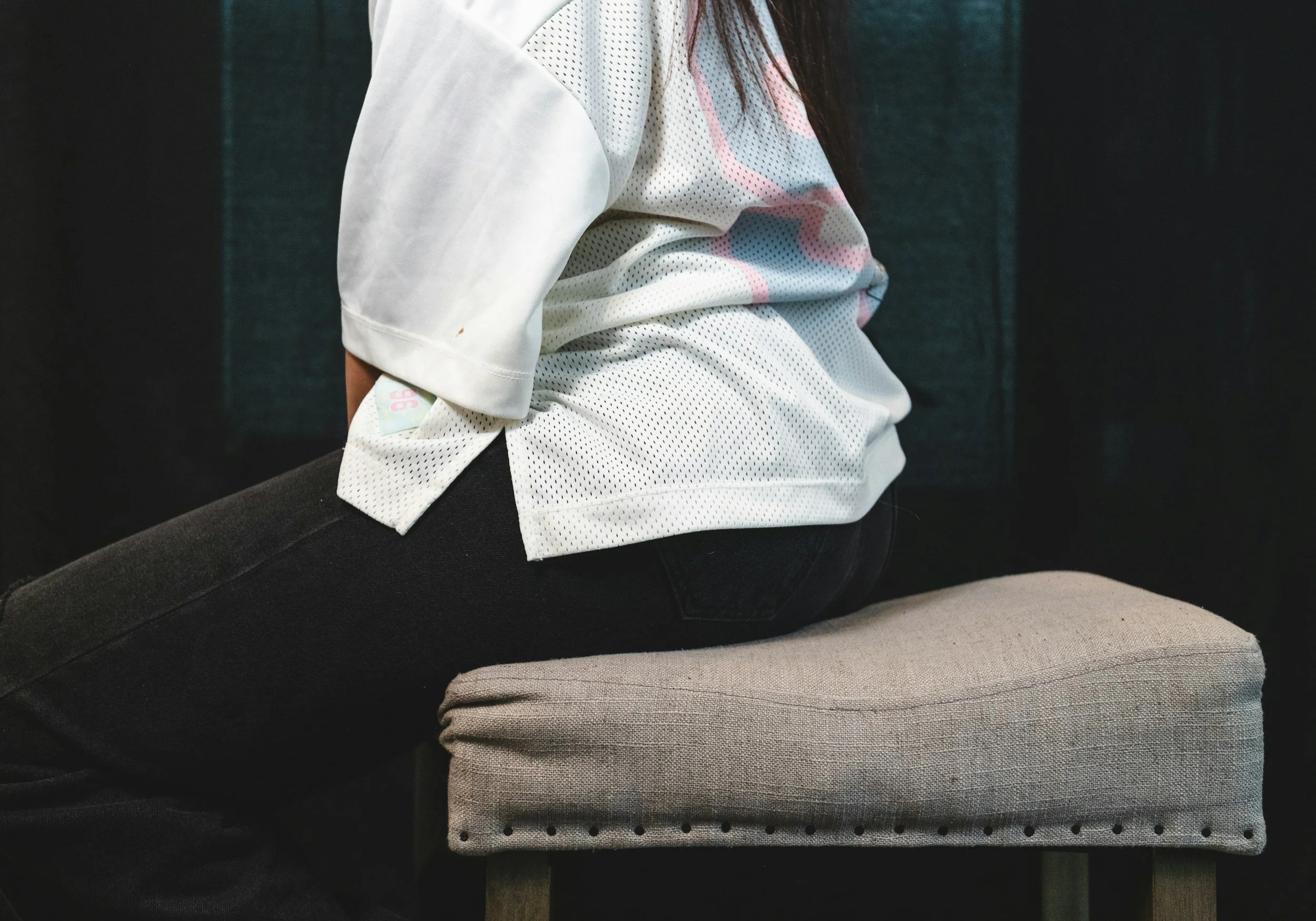
Sitting, believe it or not affects your Pelvic Floor
5. Try a Supported Child's Pose
A supported wide-knee Child's Pose can create a lovely opportunity to notice the pelvic floor without actively trying to strengthen it.
Begin sitting toward your heels with your knees comfortably apart. If your hips don't reach your heels, place a folded blanket or pillow between them. Position a bolster or stack of pillows lengthwise in front of you and slowly fold forward, allowing your chest and head to be supported.
Let yourself settle.
As you inhale, imagine your breath traveling into your ribs, belly, hips, and pelvic floor. Rather than actively pushing downward, simply notice whether the muscles underneath you can soften.
Do you notice yourself clenching as you exhale? Can you let a little of that tension go?
Stay for several comfortable breaths. This can be particularly nice after a long day of sitting, carrying children, working, or simply being a human with a busy brain.
6. Build Support With Glute Bridges
Your pelvic floor doesn't work in isolation. Your glutes, hips, abdominal muscles, diaphragm, and pelvic floor all contribute to how your body manages movement and pressure.
Lie on your back with your knees bent and feet comfortably planted on the floor. Exhale as you gently lift your hips toward the ceiling. Think about your glutes and core supporting the movement rather than squeezing everything as hard as possible.
Lower slowly and allow your muscles to relax.
Try several comfortable repetitions while continuing to breathe. If you experience pelvic heaviness, pressure, pain, or other symptoms with the movement, stop and consider getting individualized guidance.
7. Show Your Hips, Glutes & Abdomen Some Love
Sometimes supporting the pelvic floor means paying attention to everything surrounding it.
Using a foam roller, massage ball, or your own hands, explore the muscles around your glutes, outer hips, thighs, and abdomen. Move slowly rather than attacking every tender spot you find.
When you discover an area that feels tight or interesting, pause. Take several slow breaths and notice whether the sensation changes.
Self-massage can be less about "getting the knot out" and more about giving your nervous system an opportunity to notice, soften, and reconnect with the area.
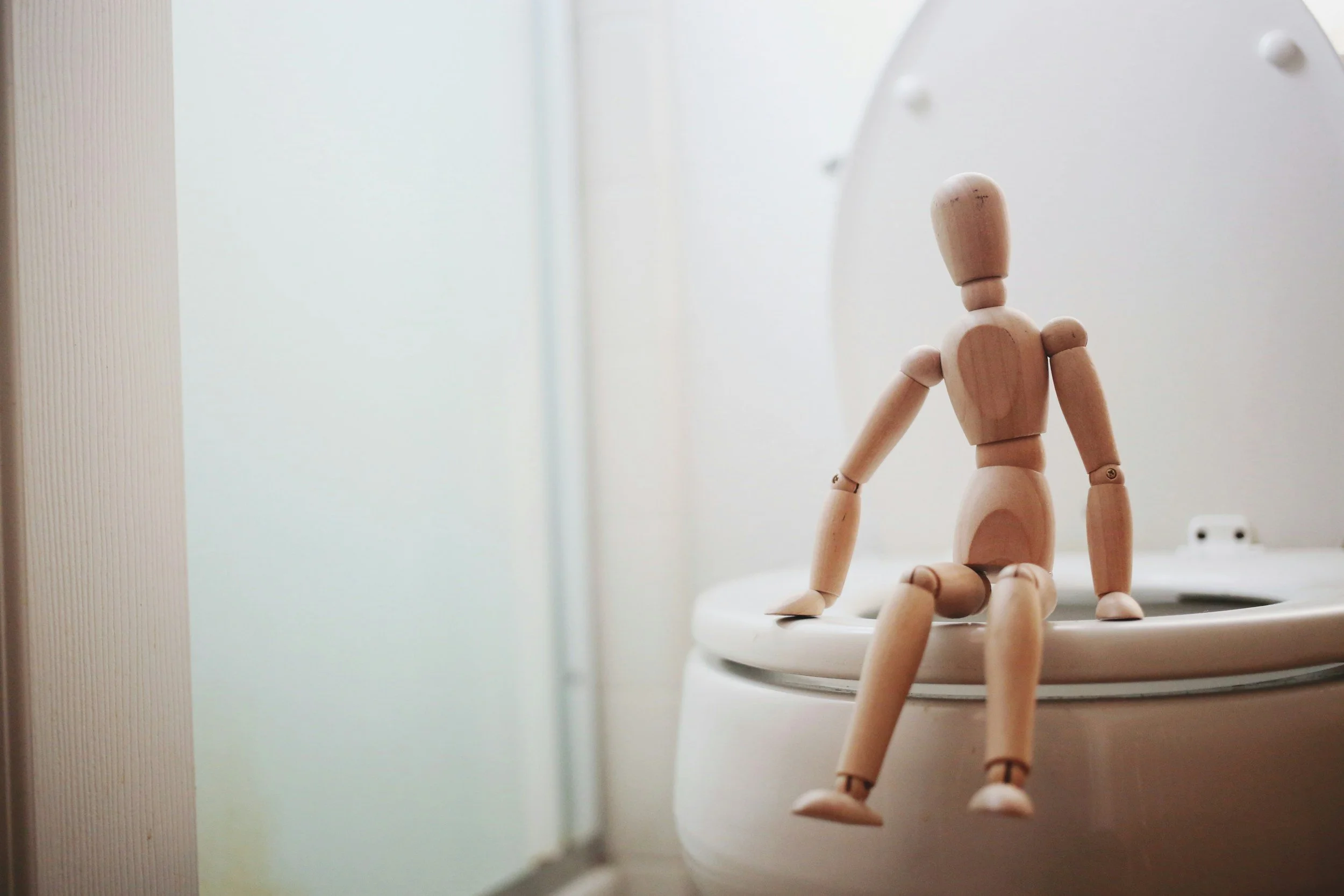
Yes we’re talking about poop
8. Make Pooping Easier
Constipation and regularly straining during bowel movements can place additional pressure on the pelvic floor. One incredibly simple change is elevating your feet while you're on the toilet.
Use a toilet stool, Squatty Potty, or even a sturdy child's stool to bring your knees higher than your hips. Lean slightly forward, breathe, and give your body time rather than forcing or holding your breath and straining.
It may not be the most glamorous form of pelvic floor care, but your pelvic floor will appreciate it.
9. Consider Belly Support During Pregnancy
Pregnancy creates enormous changes throughout the abdomen, pelvis, hips, and pelvic floor.
Later in pregnancy, some people find a maternity support belt or belly band helpful for additional support during walking, standing, or daily activities. The goal isn't to tightly bind the belly or wear support every waking hour, but to offer some additional comfort when your changing body could use it.
If you're experiencing significant pelvic pain, heaviness, pressure, or other new symptoms during pregnancy, talk with your prenatal healthcare provider rather than relying on a support belt alone.
10. Explore Perineal Massage Before Birth
As birth approaches, you can also begin becoming more familiar with your perineum—the tissue between the vaginal opening and anus that stretches significantly during vaginal birth.
Research suggests that antenatal perineal massage during the final weeks of pregnancy may reduce some forms of perineal trauma, particularly for people preparing for their first vaginal birth.
Beyond preparing the tissue, I love the awareness component of this practice. It gives you an opportunity to become familiar with sensations of pressure and stretching in this area before labor.
If you're interested in perineal massage, talk with your midwife, OB, or other prenatal healthcare provider about when and how to begin and whether it's appropriate for your pregnancy.
Your Pelvic Floor Doesn't Have to Be a Mystery
You don't need to wait until you're leaking, experiencing prolapse, or living with pelvic pain to start getting curious about your pelvic floor.
For postpartum moms especially, I think this matters.
Your body spent months adapting to pregnancy. Whether you gave birth vaginally or by Cesarean, pregnancy and postpartum recovery involve tremendous changes throughout your abdomen, pelvis, breathing patterns, core, and pelvic floor. Yet after birth, most of the attention understandably shifts toward the baby.
Pelvic floor care offers an opportunity to turn some of that attention back toward you.
It might mean addressing a symptom that's bothering you. It might mean rebuilding strength and coordination. It might mean learning how to relax muscles you've unknowingly been gripping. Or it may simply mean becoming more familiar with a part of your body you've rarely been encouraged to talk about.
That's what I hope this guide gives you: a place to start.
Not judgment. Not another thing you're "supposed" to be doing perfectly.
Just curiosity, connection, and a little more awareness of the body that's been supporting you all along.
Want More Support With Your Pelvic Floor?
At Luna Wellness in Portland, Oregon, I offer gentle, consent-based pelvic floor bodywork with a particular focus on pregnancy, postpartum recovery, and reconnecting with your body after birth.
Sessions can include external and, when appropriate and desired, internal pelvic floor bodywork. My approach isn't about deciding something is "wrong" with you or immediately trying to fix it. We begin with education, curiosity, comfort, and understanding what you want from the work.
Learn more about Pelvic Floor Therapy at Luna Wellness with your free consult and check-in.